What is a negotiated tender, and when does it make sense?
A negotiated tender is a procurement pathway in which a client selects a preferred builder before the final construction price has been agreed. The builder then works with the architect and consultants as the design develops, pricing the work progressively and negotiating the final construction contract once the scope is sufficiently resolved.
It is not automatically a cost-plus contract. It is not automatically open book in every form. Those commercial terms must be agreed as part of the pre-construction engagement and the eventual building contract.
For complex architectural homes, a well-run negotiated tender can create price transparency without waiting until the end of documentation to discover whether the design and budget still align.
TCON's three tender pathways
Pathway
How it works
Best suited to
Competitive tender
Several selected builders price the same developed documentation package.
Well-documented projects where a like-for-like market comparison is valuable.
Negotiated tender
A preferred builder prices and reviews the project while documentation develops, then negotiates the construction contract.
Complex homes where continuity, buildability and early cost testing matter.
The builder is formally engaged for defined pre-construction advice and deliverables. The later construction contract is a separate decision.
Projects needing early advice on structure, access, staging, services, risk or program.
The pathways can overlap in practice. For example, early contractor involvement may lead into a negotiated tender, but the engagement should make clear what is being provided and what happens if the parties do not proceed to construction.
How a negotiated tender works
1. Select the builder
The client and architect short-list builders based on relevant work, team capacity, references, systems and commercial fit. Interviews, project visits and discussions with past clients are more useful at this stage than asking for an early headline price from incomplete documents.
2. Agree the pre-construction process
The team should document:
- What the builder will review
- Which trade packages will be tested
- How often the budget will be updated
- Whether trade quotations will be shared
- How preliminaries, margin, allowances and contingencies will be presented
- What program and constructability outputs are expected
- Whether a pre-construction fee applies
- What each party can use if a construction contract is not agreed
TCON's Pre-Construction Program is not charged. That is TCON's commercial approach, not a general rule across the industry.
3. Develop and test the price
The builder prepares a cost plan, records assumptions and tests the packages that materially affect the budget. As documentation improves, allowances should be replaced with current trade and supplier pricing.
Competitive tension can still be maintained. Major packages may be tested with more than one appropriate subcontractor or supplier. The aim is not to collect the largest possible pile of quotations. It is to obtain comparable, current pricing from trades capable of delivering the required quality and program.
4. Resolve scope and risk
The team identifies exclusions, incomplete design, latent-condition risk, long-lead decisions, provisional sums and the intended contingency position.
The price becomes more reliable when uncertainty is named and allocated. Hiding uncertainty inside a single number does not make it disappear.
5. Negotiate the construction contract
When the documents and commercial position are sufficiently resolved, the parties negotiate the building contract. The contract type, price mechanism, progress claims, security, variations, delays, defects, insurance and dispute process should be considered separately from the decision to use negotiated tendering.
The client should obtain independent legal advice on the proposed contract and amendments.
When negotiated tender works well
It is particularly useful where:
- The home includes a basement, retained structure or complex temporary works
- The design relies on specialist fabrication or difficult interfaces
- The site has access, neighbour or staging constraints
- The budget requires regular testing during design
- The architect and client want current trade input before documentation is complete
- Team continuity is valued alongside price
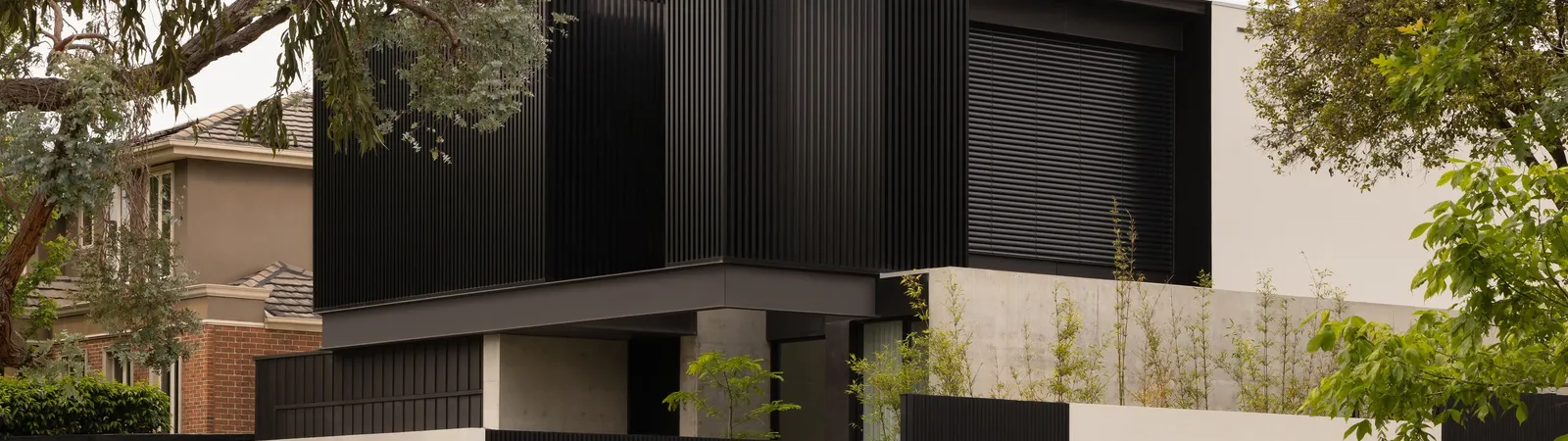
Boulevard Bungalow in Hawthorn is a good example. A cathedral-volume addition sits over a basement behind a retained home. Excavation, structure, waterproofing and architectural detailing are interconnected. The value of the builder's involvement lies in resolving those connections while the design is still developing.
When competitive tender may be better
Competitive tender may be the stronger pathway when:
- The documentation is complete and coordinated
- The scope can be priced consistently by several suitable builders
- The client wants a direct market comparison
- The project does not require material builder input before tender
- The tender rules, inclusions and qualifications can be compared fairly
The lowest tender is not automatically the best tender. A useful comparison normalises exclusions, provisional sums, program assumptions, preliminaries and proposed teams.
What transparency should look like
For TCON, transparency means the client and architect can understand how the price has developed. Major trade pricing, key assumptions, preliminaries, margin, allowances and contingencies should be visible enough for informed decisions.
It does not mean every project must use an identical spreadsheet or that every commercial arrangement is the same. The agreed pricing protocol should match the engagement and the contract.
Talk to TCON
If you are deciding how to procure an architectural project, TCON can review the documentation stage, complexity and client priorities, then recommend competitive tender, negotiated tender or early contractor involvement. The first task is choosing the right pathway, not forcing every project into the same one.
Building with TCON
Considered architecture demands considered building. Building with TCON is a complete account of how TCON works. Available on request and reviewed personally by Tim before release.
Request a copy of Building with TCON.